How to Make a Sourdough Starter: A Complete Beginner’s Guide

There is a common myth that baking sourdough at home requires advanced skills, strict schedules, and constant precision. In reality, sourdough is one of the most natural and forgiving ways to bake bread. At its core, it relies on flour, water, salt, and time, allowing natural fermentation to do most of the work for you.
This pillar guide explains how to create, maintain, and use a sourdough starter from scratch. It is designed to give you a complete overview of sourdough fermentation, feeding routines, and practical long‑term care. If you are completely new, start with the Sourdough Bread Basics, where core concepts and terminology are explained step by step. If you already maintain a starter and want to reduce waste, our collection of sourdough discard recipes shows how excess starter can be used intentionally in everyday baking.
Once you understand how sourdough starters work, you can confidently move on to baking bread itself. This guide serves as the foundation for our sourdough bread recipes and helps you build a healthy starter that will support baking for years to come.

What Is a Sourdough Starter?
A sourdough starter is a mixture of flour and water that captures wild yeast and lactic acid bacteria from the environment and the flour itself. Over several days, these microorganisms establish a stable culture that can be used to ferment bread dough naturally, without commercial yeast.
Borrow a Sourdough Starter!
Before you spend 30 days making your starter, there is an easier way! If you have anyone in your area that already has a starter, you can take a bit of that one and feed it. Within a day it grows and is ready to use! Shoot us a message to see if you want to get some of our starter (located in The Netherlands).
Why Making Your Own Sourdough Starter Matters
A homemade sourdough starter adapts to your kitchen environment, flour choice, and feeding rhythm. Over time, it develops a stable balance of wild yeast and lactic acid bacteria, creating more reliable fermentation and better flavor than commercial yeast. Maintaining your own starter also gives you full control over fermentation speed, hydration, and long‑term storage.
What You’ll Need
Flour: Whole wheat or rye flour is often recommended for starting out, since they contain more nutrients that encourage fermentation.
Water: Filtered or dechlorinated water works best, as chlorine can slow or inhibit microbial activity. If you live in a country with good quality tap water, you can use that as well.
A container: A glass jar or plastic container that can hold at least 2 cups of mixture and can be sealed.
A spoon or spatula: For mixing.
A kitchen scale: To measure flour and water accurately.
Step-by-Step Process
Day 1
Mix 60 g (about ½ cup) of flour with 60 g (about ¼ cup) of water in your clean container.
Stir until no dry flour remains.
Loosely cover the container and leave it at room temperature.
Day 2
You may see little to no activity yet, which is normal.
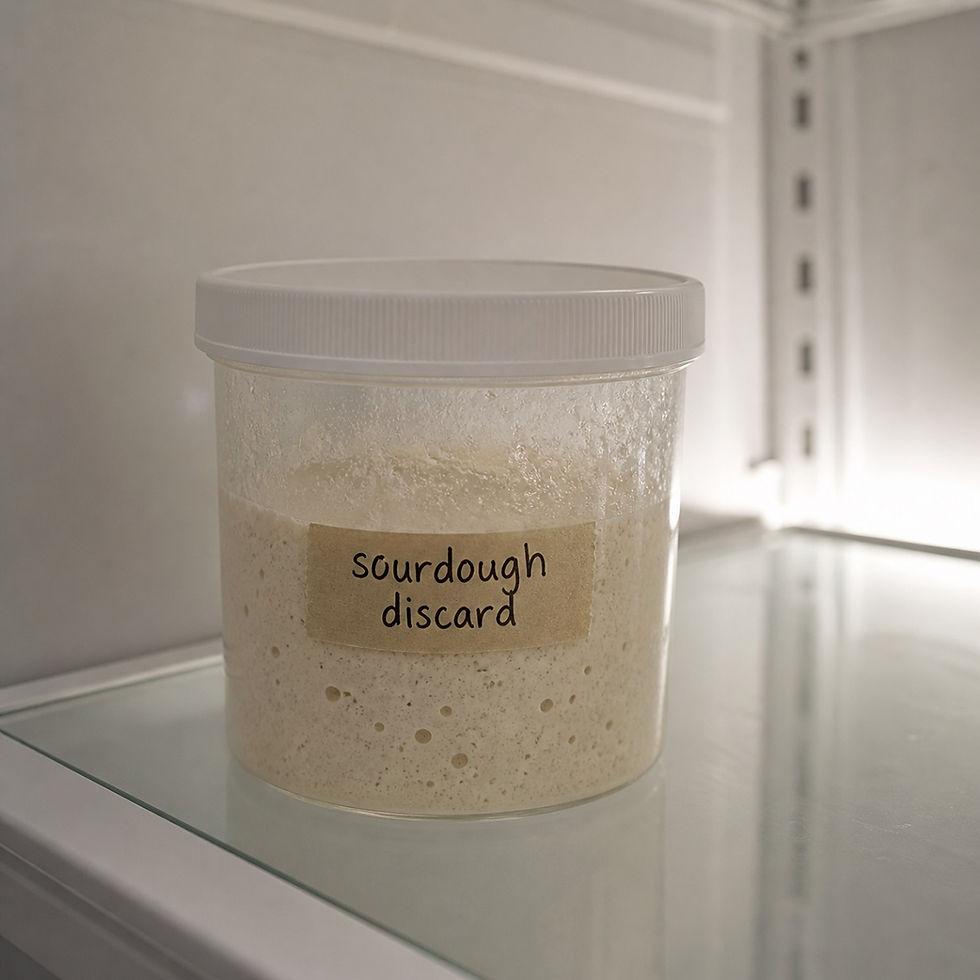
Discard about half of the mixture. You can bake cookies or any other recipe from the discarded amount. Just make sure you add baking powder to your pastry at this stage as the starter is by far not strong enough to rise on its own as discard.
Add 60 g fresh flour and 60 g water, mixing well.
Days 3–5
Continue the process of discarding half and feeding with equal parts flour and water once every 24 hours.
By Day 3 or 4, you should see some bubbles, a slightly sour aroma, and a rise in volume after feeding.
Day 6 and beyond
When the starter reliably doubles in size within 4–8 hours of feeding and has a pleasantly tangy smell, it’s ready to use for baking.
It could take up to 14 to even 30 days to get there.
Tips for Success
Warmth: A consistent room temperature (around 70–75°F / 21–24°C) helps the culture thrive.
Switching flours: Once established, you can maintain the starter with all-purpose flour if preferred.
Storing: If you’re not baking often, keep the starter in the refrigerator and feed it about once a week.
Using Your Starter
Once mature, your sourdough starter becomes the natural leavening for bread, pancakes, waffles, and more. Each feeding keeps it alive, and over time, it will develop its own unique flavor profile. If you are on holiday for a few weeks, take out 60% of your starter before leaving and replenish with fresh flour and water. Place in a cold refrigerator. After you come back, the starter is likely a bit watery sour. Replenish again and let it recondition to a more firm starter before using it.
How Much Should You Replenish Your Sourdough Starter?
Many beginner guides recommend discarding and replenishing 50% of your starter every time you feed it. While this approach works, it is not the only option—and for frequent bakers, it often creates far more discard than necessary.
When baking regularly (for example, two or three times a week), you can simply replenish your starter with the exact amount you used. After feeding, let the starter sit at room temperature for one to two hours to allow fermentation to start, then store it in the refrigerator. This method keeps the starter healthy, active, and balanced while minimizing discard almost entirely.
A full 50/50 refresh becomes useful when the starter shows signs of imbalance—such as becoming very runny, smelling overly sour, or losing its bubbly activity—or after longer periods without baking, such as holidays. In these cases, discarding more and refreshing with equal parts flour and water helps reset the culture.
Going on holiday: how to pause your sourdough starter safely
If you’re going away for a holiday, your sourdough starter can be paused without losing it. Before you leave, remove about 80% of the starter, then refresh the remaining portion with a 50/50 mixture of flour and water. Let it sit briefly at room temperature to start fermentation, then store it in the refrigerator. This method has been tested to work consistently for periods of up to four weeks. When you return, discard most of the starter again, feed it with fresh flour and water, and leave it at room temperature. After about one day, your starter should regain activity and be ready to use.
Using discard instead of throwing it away
Regular maintenance of a sourdough starter naturally creates discard, but that doesn’t mean it needs to be wasted. Starter that is no longer active enough for fermentation still adds flavor, acidity, and texture to baking. These qualities make it ideal for pastries and baked goods that rely on baking powder, baking soda, or eggs rather than natural yeast. You’ll find detailed inspiration and practical examples in this guide to sourdough discard pastry recipes, where both sweet and savoury applications are designed specifically for using discard with intention.
Frequently Asked Questions About Sourdough Starters
How long does it take to make a sourdough starter? A sourdough starter typically becomes active within 7 to 14 days, although in some kitchens it may take up to 30 days depending on temperature, flour type, and feeding consistency.
Why does my sourdough starter smell bad? Strong or unpleasant odors are common in the first few days. These usually stabilize as beneficial bacteria take over. Consistent feeding and discarding help restore balance.
Can I switch flour types when feeding my starter? Yes. Starters adapt well to flour changes, though switching gradually helps avoid slowing fermentation.
Do I need to discard starter every time I feed it? No. If you bake regularly, you can simply replenish your starter with the exact amount you used instead of discarding 50% every time. After feeding, let it sit at room temperature for one to two hours, then store it in the refrigerator. A full discard and 50/50 refresh is mainly needed when the starter becomes runny, overly sour, inactive, or after long breaks such as holidays.


Comments