Sourdough Ciabatta

Updated: Jul 22
Sourdough ciabatta combines the rich flavor of natural fermentation with one of the most recognizable bread textures in the world. Known for its thin crisp crust, chewy texture, and large open crumb, sourdough ciabatta is often considered one of the best examples of what a high-hydration artisan bread can achieve.
Unlike baguettes, which depend on maintaining a precise shape, ciabatta embraces a more rustic appearance. The dough remains soft and highly extensible throughout the process, creating the irregular air pockets that give ciabatta its characteristic interior. The result is a loaf with a light texture, chewy crumb, and exceptional flavor that closely resembles traditional artisan Italian bread. To bake great sourdough at home, everything starts with a healthy and active starter. A strong starter ensures reliable fermentation and helps support the structure of a wetter dough. If you are still building your foundation, it helps to understand the basics of sourdough baking through sourdough bread basics, where the full process is explained step by step.
Sourdough ciabatta is one of the most popular recipes within sourdough dough variations. While pizza, focaccia, and baguette all share similar fermentation principles, ciabatta creates one of the most open and airy crumb structures possible using the same simple ingredients.
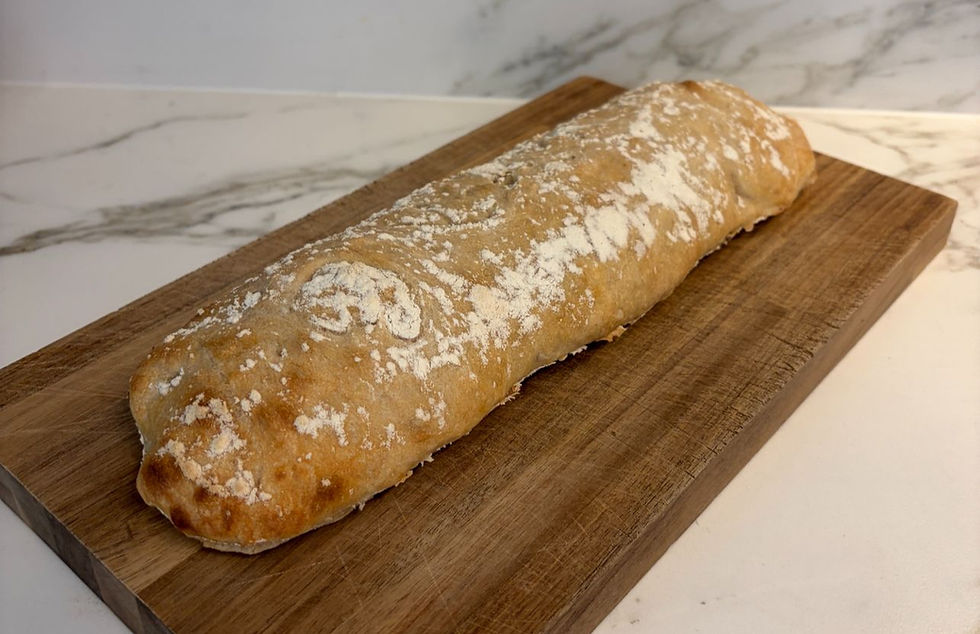
Sourdough Ciabatta and Open Crumb Structure
Ciabatta focuses on extensibility and gas retention rather than maintaining a precise shape. The dough remains softer than most traditional sourdough breads, allowing large air pockets to develop naturally during fermentation. T65 flour works particularly well because it offers enough strength to support the dough while still allowing the crumb to remain open and light. Gentle handling is especially important. Excessive shaping can collapse the air pockets that make ciabatta unique. The goal is not perfect appearance, but an airy, rustic loaf with excellent flavor and texture. A successful ciabatta should feel noticeably lighter than its size suggests, with large irregular air pockets throughout the crumb and a thin crust that remains crisp after baking.
Prep time: 25 minutes · Fermentation: 8–12 hours · Bake time: 20–25 minutes · Total: 9–13 hours
Why This Sourdough Ciabatta Works
This recipe balances hydration, fermentation, and gentle handling to create a loaf with a classic ciabatta texture. The result is a ciabatta that is:
light and airy
rich in flavor
naturally rustic
Ingredients for Sourdough Ciabatta
These ingredients create two medium ciabatta loaves.
500 g T65 flour (about 4 cups)
390 g lukewarm water (about 1⅔ cups)
100 g active sourdough starter (about ½ cup)
7 g salt (about 1 tsp)
15 g olive oil (about 1 tbsp)
The higher hydration level helps create the large air pockets and open crumb structure that make authentic sourdough ciabatta unique.
Equipment Needed
You do not need specialized bakery equipment to make sourdough ciabatta.
large mixing bowl
dough scraper
baking tray or baking stone
parchment paper
clean kitchen towel
sharp knife or bench scraper
These tools help simplify dough handling and improve consistency.
How to Make Sourdough Ciabatta
This step‑by‑step method focuses on creating an open crumb while preserving dough strength.
Step 1: Mix the dough
In a large bowl, combine the lukewarm water (390 g or about 1⅔ cups) and active sourdough starter (100 g or about ½ cup). Add the T65 flour (500 g or about 4 cups), olive oil (15 g or 1 tbsp) and salt (7 g or about 1 tsp). Mix until a rough dough forms.
Step 2: Initial rest
Allow the dough to rest for approximately 30 minutes. This helps hydrate the flour fully and makes the dough easier to develop.
Step 3: Build strength
Perform at least one, but preferably three sets of stretch‑and‑folds during the first two hours of fermentation. The dough should become smoother, stronger, and noticeably more elastic while still remaining soft enough to develop the characteristic open crumb of ciabatta.
Step 4: Bulk fermentation
Cover the dough and allow it to ferment until it noticeably increases in volume and develops visible air pockets. If the dough struggles to gain strength, you can review dense sourdough fixes to better understand common structural issues.
Step 5: Transfer and divide
Gently transfer the dough onto a wet surface. Handle it carefully to preserve as much internal gas as possible. Divide the dough into two rectangular portions.
Step 6: Shape minimally
Unlike many breads, ciabatta should not be aggressively shaped. Lightly organize the dough while preserving the air pockets developed during fermentation. If you just performed one stretch and fold before, your dough might be runny and difficult to shape. in that case just try to make a log shape. and after step 7, fold the outer 2 cm (~1 inch) inside) to get the final shape.
Step 7: Final rest
Allow the ciabatta loaves to rest until slightly expanded and visibly airy. The dough should feel light and delicate when handled.
Step 8: Bake
Preheat the oven to 240 °C (465 °F). Bake for approximately 20–25 minutes until the ciabatta develops a golden-brown crust and sounds hollow when tapped on the bottom.
Sourdough Ciabatta vs Sourdough Baguette
Both breads use similar ingredients, but they produce very different results.
Feature | Sourdough Ciabatta | Sourdough Baguette |
Shape | Rustic rectangle | Long and slender |
Crumb | Very open | Open but more uniform |
Crust | Thin and crisp | Thin and crisp |
Handling | Minimal shaping | More shaping required |
Texture | Airy and chewy | Airy and structured |
Appearance | Rustic | Traditional French |
The biggest difference is the crumb structure. Ciabatta focuses on large air pockets while baguettes emphasize shape and balance.
Texture and Flavor
A well-made sourdough ciabatta develops a crisp crust and an open, airy crumb filled with irregular holes. Despite its light structure, the loaf remains pleasantly chewy and satisfying. Natural fermentation contributes mild tangy notes that complement the wheat flavor while enhancing aroma, crust development, and overall complexity. The result is a bread that feels both rustic and refined at the same time.
Popular Ways to Serve Sourdough Ciabatta
One of the reasons ciabatta remains popular is its versatility. Common ways to serve it include:
sliced for sandwiches
dipped in olive oil and balsamic vinegar
served alongside soups
paired with cheeses and cured meats
used for panini sandwiches
toasted with garlic and herbs
served alongside pasta dishes
topped with tomatoes and olive oil
bruschetta
served with olive tapenade
Its open crumb makes it particularly well suited for sandwiches and toppings.
When Sourdough Ciabatta Goes Wrong
If the crumb feels dense instead of airy, the dough may not have developed enough strength during fermentation. If the dough fails to rise properly, reviewing why sourdough doesn’t rise can help identify the underlying cause. Most ciabatta issues result from weak starter activity, insufficient fermentation, or excessive handling that collapses the air pockets developed during bulk fermentation.
Serving Sourdough Ciabatta
Sourdough ciabatta is best enjoyed fresh, when the crust remains crisp and the crumb stays light and airy. Its open crumb and crisp crust make it ideal for sandwiches, bruschetta, appetizers, dipping oils, and charcuterie boards. The combination of a crisp crust and open crumb gives ciabatta a distinctive character that works in both casual and formal meals.
Nutritional Information
This nutritional estimate reflects one quarter of a ciabatta loaf.
Nutrient | Amount per Serving |
Calories | 220 kcal |
Total Carbohydrates | 43 g |
Fiber | 1.7 g |
Sugars | 0.8 g |
Protein | 7 g |
Total Fat | 0.7 g |
Saturated Fat | 0.1 g |
Salt | 0.7 g |
Sodium | 280 mg |
Sourdough ciabatta demonstrates how small changes in hydration, handling, and shaping can completely transform the texture of a naturally fermented dough. By focusing on extensibility and gentle handling, you can create the open crumb and light texture that make ciabatta so unique.
As your confidence grows, recipes such as sourdough baguette demonstrate how the same ingredients can produce a more structured loaf while still relying on the same sourdough foundation. That is where sourdough becomes remarkably versatile across a wide variety of breads and dough styles.


Comments