Growing Climbing Strawberries: Balcony Hummi Strawberry Guide

Updated: Apr 24
Growing climbing strawberries on a balcony is easier than most people expect, especially when you choose a productive variety like the Hummi® climbing strawberry. With the right pot, a simple trellis, and consistent watering, you can harvest fresh strawberries even in very small spaces. This variety also grows well in normal garden soil, but it is particularly practical for balconies and container gardening. Explore more guides in our categories for balcony fruits and balcony vegetables to expand your home‑grown harvest.
Climbing strawberries are one of the best options for balcony gardening because they grow vertically and require minimal ground space. Their compact growth habit makes them ideal for small outdoor areas where traditional strawberry beds are not possible. The Hummi® climbing strawberry is one of the most reliable balcony varieties due to its strong growth and consistent fruiting.
Table of Contents
Why I Chose the Climbing Hummi® Strawberry
Year One: Establishing the Plants
Watering, Soil and Nutrients on a Balcony
First Harvest Results
Lessons from the First Year
Year Two: Looking Forward to a Bigger Harvest
From Balcony to Kitchen
FAQ About Climbing Strawberries
Why I Chose the Climbing Hummi® Strawberry
This section explains why climbing strawberries are ideal for balconies and small spaces. In the winter of 2024, I began planning my balcony and garden setup for the following season. When I was younger, we grew regular strawberries at home, and they always tasted far better—and were much more affordable and organic—than those from the supermarket. With my limited space, I wanted to try a climbing variety and eventually came across the climbing Hummi® Strawberry.
At first, I bought seeds from Etsy, but they never sprouted. Later in the season, I decided to order three young climbing strawberry plants from Baldur Netherlands. This was my first time buying fruit plants online, and I had no experience with this climbing strawberry. That’s when I decided to start documenting my progress here. I plan to update this blog each year as the plants mature and (hopefully) produce more fruit.
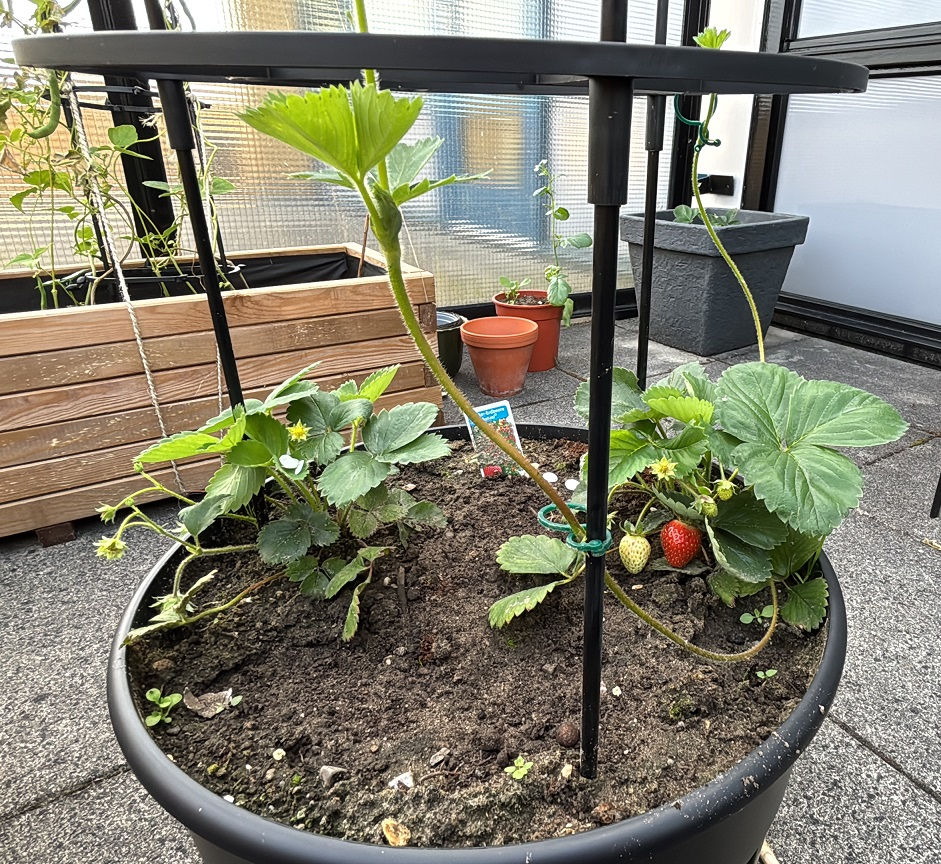
Year One: Establishing the Plants
These observations describe how young climbing strawberries adapt during their first season. Since I like to get an early start, I usually plan in the winter and begin pre‑growing plants indoors in April or May. However, after the Etsy seeds failed to germinate, I didn’t have anything ready for outdoors. By the time I ordered plants from Baldur, it was already June—about a two‑month late start in the growing season.
The plants arrived in great condition—healthy, green, and well‑packaged. I didn’t take pictures at that stage, since I hadn’t yet decided to start this blog. Right away, I repotted them, added water and nutrients, and placed two combined in one tomato tower pot with a climbing frame and one in a separate pot. The Hummi® climbing strawberry is known for strong growth and reliable fruiting in containers, even during the first year.
Watering, Soil and Nutrients on a Balcony
When growing in pots on a balcony, water and nutrients are especially important, as soil dries out faster and nutrients are depleted more quickly than in the ground. Strawberries like moist soil, so in hot, dry weather, daily watering is fine—just avoid overwatering.
Baldur recommends removing flowers during the first weeks so the plant puts energy into developing stronger roots and shoots. That way, the plant becomes more vigorous and yields more later on. However, since I started late and really wanted to taste some strawberries this year, I ignored that advice and let the flowers grow. How did this work out?

First Harvest Results
This part shows what to expect from a first‑year climbing strawberry harvest.
Unlike traditional strawberries, which often send out runners that root and become new plants, this climbing strawberry variety sends out side‑branches with leaves and flowers but no roots. Because I didn’t cut the flowers, only one of the three plants produced two branches, while the others stayed smaller. Still, they managed to produce fruit.
By the end of summer, I had harvested around half a kilo of strawberries—not bad considering the late start. And the taste? Absolutely delicious: sweet, fresh, and much better than store‑bought. Compared to regular balcony strawberries, climbing varieties can produce more fruit per square meter, especially once they mature.
Lessons from the First Year
These practical lessons help improve yield and plant strength in the next season.
What I’ll do differently next year:
Cut off flowers early to encourage stronger branching.
Place the third plant in a climbing frame as well.
What worked well this year:
Daily watering in hot, dry weather.
The plants grew well in pots; the climbing container worked perfectly.
It should be noted that this plant is not a natural climber—you need to attach the side‑branches to the climbing frame.
Nutrients seemed balanced; I added slow‑release fertilizer twice during the year.
Year Two of Climbing Strawberry: Looking Forward to a Bigger Harvest
This section previews expected improvements in plant growth and fruit yield next season. To be continued…
From Balcony to Kitchen
Growing your own climbing strawberries is rewarding, space‑efficient and surprisingly productive. As these plants mature in the coming seasons, I’ll continue updating this guide with new growth results, yield improvements and practical tips. And once the harvests become larger, I’ll also start sharing homemade strawberry recipes—from simple fresh desserts to balcony‑grown jams and sauces. If you’re planning to grow your own fruit or want to cook with home‑grown strawberries, keep an eye on this page for future updates.
FAQ About Climbing Strawberries
Q1: What makes climbing strawberries different from regular strawberries?
A: Climbing strawberries grow vertically and produce long side‑branches instead of runners, making them ideal for balconies and small spaces.
Q2: Can climbing strawberries grow in pots?
A: Yes. They grow very well in containers as long as they receive consistent water and nutrients.
Q3: Do climbing strawberries need a trellis?
A: Yes. They are not natural climbers, so you must attach the side‑branches to a frame or support.
Q4: How much fruit can I expect in the first year?
A: First‑year harvests are usually small, but half a kilo is realistic depending on watering, nutrients and start date.
Q5: Should I remove flowers in the first year?
A: Removing flowers helps the plant build stronger roots and branches, but you can leave a few if you want an early taste.


Comments