30-Minute Quesadilla Recipe (Crispy, Simple and Versatile)

Few dishes combine simplicity, speed, and versatility as effectively as the quesadilla. Often reduced to a quick snack or compared to a grilled cheese, the traditional quesadilla is far more than a shortcut meal. At its core, it represents a balance between texture, heat, and filling, where a properly cooked tortilla becomes the foundation for a wide range of ingredients. Within a broader collection of north american main courses, it stands out as a flexible dish that can shift easily between casual comfort food and a structured, ingredient-driven meal.
The identity of a quesadilla lies not only in its filling, but in its preparation. The goal is not to simply melt cheese between two tortillas, but to create contrast: a crisp, lightly charred exterior paired with a warm, cohesive interior. Achieving this requires controlled heat rather than high intensity, allowing the tortilla to develop a lightly toasted surface without becoming dry or brittle. This method enhances both flavor and texture, turning a minimal set of ingredients into a well-balanced dish.
One of the key advantages of making quesadillas at home is the ability to control the quality of each component. Fresh vegetables, herbs, and proteins can be selected and prepared with intention, which has a direct impact on the final result. By using ingredients grown at home, you gain both freshness and consistency, especially when working with high-impact elements such as herbs and peppers. To explore how to build this level of control into your cooking, see growing your own vegetables at home and how it supports flavor, texture, and seasonal cooking. This quesadilla recipe focuses on texture, heat control, and ingredient balance.
Home-Grown Vegetables for Quesadilla Fillings
Quesadillas provide a flexible base for a wide range of fresh ingredients, making them particularly well suited for seasonal and home-grown produce. Rather than relying on a fixed combination, the dish adapts easily to what is available, with vegetables contributing texture, moisture, and layered flavor. Certain ingredients stand out for their balance and compatibility with heat. Squash blossoms offer a delicate, slightly sweet profile, while peppers such as poblano or jalapeño add controlled heat when roasted and peeled. Leafy greens like spinach or Swiss chard can be wilted directly onto the filling, and spring onions contribute brightness and structure. Firmer vegetables, including zucchini or deseeded tomatoes, can also be incorporated without compromising texture. Because of this flexibility, quesadillas function as a practical way to use a wide variety of vegetables in a single preparation. By selecting fresh, well-prepared ingredients, the focus remains on balance and consistency rather than complexity, making the dish both adaptable and efficient.
Handmade Masa Quesadillas and Traditional Texture
This variation uses fresh corn dough (masa), which changes both the structure and the final eating experience compared to standard tortillas. Because the dough cooks together with the filling, moisture is retained during preparation, allowing steam to develop inside the folded pocket. This process creates a softer, more integrated texture, where the masa and filling form a cohesive layer rather than separate components. The result is a richer, more balanced bite that cannot be replicated with pre-made tortillas, as the cooking method itself becomes a defining part of the dish.
Prep time: 20 minutes · Cook time: 10 minutes · Total: 30 minutes
Ingredients for Quesadilla Preparation
These ingredients form a flexible base for building quesadillas, allowing different combinations of cheese, vegetables, and proteins while maintaining balance between texture, flavor, and heat.
250 g (2 cups) Masa Harina
360 g (1.5 cups) warm water
½ tsp Salt
Filling: Shredded Oaxaca cheese (or Monterey Jack), sautéed mushrooms, or squash blossoms.
Optional: A leaf of epazote or fresh home-grown cilantro in each pocket.
Instructions for Preparing Quesadillas
These steps outline a controlled cooking process focused on achieving a balanced result, where the tortilla develops a crisp, lightly toasted surface while the filling remains cohesive and evenly heated.
Mix the masa harina (250 g or 2 cups) , salt (½ tsp), and warm water (360 g or 1.5 cups). Knead until it feels like playdough, moist but not sticking to your hands. Cover with a damp cloth for 15 minutes.
Roll a golf-ball-sized piece of dough. Use a tortilla press (lined with plastic) to flatten it into a circle.
Place your cheese and chosen fillings on one half of the raw circle.
Carefully fold the other half over to create a half-moon. Press the edges gently to seal.
Place on a medium-high preheated cast-iron skillet or comal. Cook for 3–4 minutes per side until the dough is opaque, firm, and spotted with brown.
The “Crispy Tortilla” Method for Weeknight Quesadillas
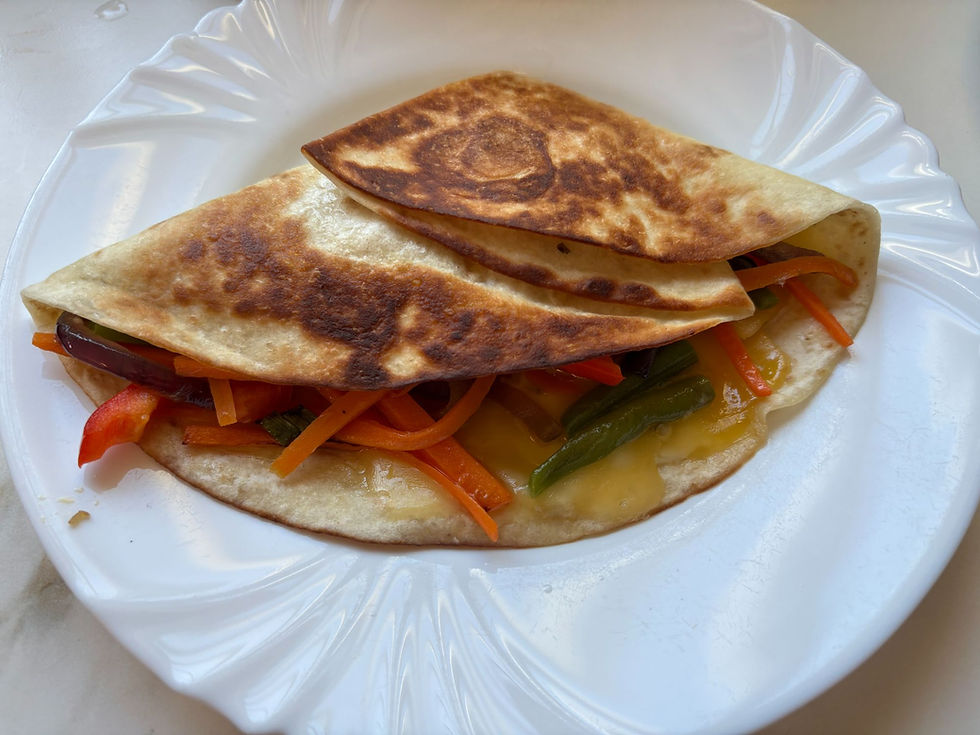
This method focuses on speed, consistency, and texture by using pre-made tortillas and controlled heat. Instead of relying on steam within the dough, a thin layer of oil or butter is used to create a crisp, lightly fried exterior while the filling melts and binds inside. The result is a clear contrast between a golden, toasted surface and a warm, cohesive interior, making this approach ideal for quick, repeatable meals.
Ingredients for the Crispy Tortilla Method
These ingredients are selected to achieve a balanced quesadilla with a crisp exterior and a well-melted filling, allowing flexibility in cheese, vegetables, and proteins while maintaining structure and flavor.
3 Large Flour or Corn Tortillas (pre-made)
9 Slices of cheese
1 Onion
3 spring onions
1 Carrot
3 Cloves of garlic
1 Bell pepper
Handful of green beans
Homemade guacamole dip or sriracha sauce
Add-ins: Leftover roasted chicken, pickled jalapeños, mushrooms or any other vegetable.
Instructions for the Crispy Tortilla Method
These steps focus on controlled heat and timing to achieve a golden, crisp exterior while ensuring the filling melts evenly and remains cohesive inside the tortilla.
Sauté the vegetables over high heat for a few minutes. For carrots and other firm vegetables, ensure they are either blanched or cut into fine julienne strips to guarantee even cooking.
Optionally add some sauce to the tortilla before laying a few slices of cheese on it (covering 1/3rd of the tortilla) and then place the vegetables in it. Fold it into a nice package.
Set a non-stick or stainless steel pan over medium heat. Add a light coating of oil or a small knob of butter.
Place one tortilla with filling in the pan and fry till golden brown.
Once the bottom is golden brown and crisp (about 2 minutes), carefully flip.
Cook until the second side matches the first and the cheese is bubbling at the edges. Slice into wedges or serve as full and serve immediately with salsa or home-made guacamole.
Images: from vegetables to veggie-packed quesadilla.
Once the quesadillas are assembled and cooked, the structure of the dish becomes equally relevant from a nutritional perspective. Because the recipe is built around a limited number of core components—tortilla, filling, and optionally cheese—the overall nutritional profile is directly influenced by the choice and quality of these ingredients. This makes quesadillas a highly adaptable dish, where both flavor and nutritional balance can be adjusted through ingredient selection rather than additional processing or modification.
Nutritional Information of Quesadillas
This overview reflects the nutritional composition of quesadillas based on their core ingredients, where the balance of carbohydrates, fats, and proteins is directly influenced by the choice of tortilla, filling, and preparation method.
Nutrient | Amount per Serving (1 tortilla) |
Calories | 315 kcal |
Total Fat | 17.2 g |
Saturated Fat | 10.5 g |
Cholesterol | 44 mg |
Sodium | 456 mg |
Salt | 1.14 g |
Total Carbohydrates | 28.6 g |
Dietary Fiber | 4.2 g |
Sugars | 4.8 g |
Protein | 13.5 g |
Quesadillas demonstrate how a simple cooking method can deliver a structured and satisfying result when the balance between heat, texture, and ingredients is controlled. By focusing on proper preparation rather than complexity, even a small set of components can produce a dish that is both versatile and consistently repeatable.
Whether prepared as a quick weeknight meal or built around carefully selected, seasonal ingredients, the quesadilla adapts easily without losing its core identity. This makes it one of the most practical dishes for combining speed with quality, especially when ingredient choice is aligned with freshness and availability. Over time, refining technique and selecting better components will have a greater impact than adding more elements, reinforcing the idea that simplicity, when executed correctly, produces the strongest results.


Comments